



Morals, Ethics & Feelings in Negotiation
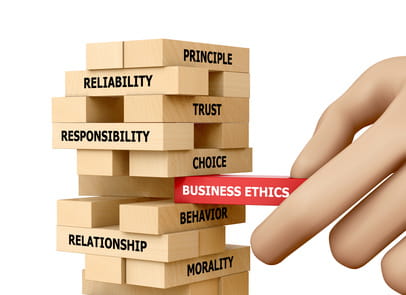
Learn why our negotiation interests are influenced by our feelings, morals and ethical style. Analyse both the positive and negative attributes of ethics in detail.
One of my clients, a real estate developer, contacted me about a problem concerning a ten floor office building he was looking to rent. He was negotiating with a potential client, A, about renting 7 floors of the building. They almost had reached a deal but the draft of the contract was at A’s office for approval. There had been no reply for a month. Meanwhile, another potential client B approached the developer about leasing the whole building at a higher rent than client A proposed to pay.
My client’s question was: Should I start negotiating with client B when I have almost agreed to rent to A? Would it be ethical to do so?
My response is: Are morals and ethics direct guidelines in negotiation? Perhaps I will provide a surprising answer, but my opinion is no, they are not determinant in negotiation. Negotiation morals and ethics are indirect consequences of our actions.
What motivates us to negotiate?
We all concur with that, but what if by following our interests we might harm others? Let us consider my client, for example. What is in the best interest of my client? Is it to lease the whole building at a higher rent to B or to go along with client A who is considering renting only 7 floors at a smaller rent? How can ethics solve this problem? It can not do so.
If my client discovers a way to negotiate with client B and also to secure his relationship with client A, then everything is all right. It’s all about relationships. Should we care about them? Of course, if we want a long term business. We can not profit from every single client and then turn our back on them.
There are also situations, at limits, when we can not afford to care about relationships. There are extreme cases of life and death, or survival of lives, or our business. What line do we follow in those cases, when we are desperate? Only our interests. We don’t even think about ethics or morals.
Can we be ethical or moral against our interests? Not really. One might argue that charity, religion and other social activities are based on ethics and morality and sometimes we act contrary to our interests. Well, do we? It’s just that in those cases our interests are not necessary linked with material outcomes but with relationships here on earth and our relationship with God. Still, they are our interests.
So, if in most cases we seek out our best interests, then how can we succeed in our goals and still be ethical? The answer is in attitude. It doesn’t matter what we do, but it does matter how we do it. And how we do it, it depends on our behavior.
Professor Gavin Kennedy in his red and blue theory finds four different types of human behaviours, each of them with positive and negative attributes:
- Is interested in other people
- Is a good listener
- Is constructive, helpful, co-operative
- Is informative, open, approachable
- And sees the positive in others
- Is patient
- Too much concerned with others
- Allows others set the agenda
- Loses sight of their own interests
- Is a Soft touch, too trusting, naive
- Is self-deprecating, self-blaming
- Easily disillusioned, gives-up
- Is determined to get the best deal for self
- Takes charge and has ‘presence’
- Is decisive, audacious
- Likes a good challenge
- Is good in a crisis, has stamina, takes stress well
- Tramples over other people
- Can bully, threaten, or resorts to coercion
- Can ignores other party’s interests, ideas
- Is impatient, impulsive, manipulative
- Is inflexible, intransigent, creates stress
- Is analytical
- Does respond to opportunity
- Looking after self first (and only)
- Avoiding public humiliation of the other negotiator
- Educating others to be prudent
- Playing well to a game plan
- Is self-seeking through ‘cheating
- Likes to manipulate and plot
- Often disregards others
- Exploits the innocent, and the careless
- Produces both cynicism and suspicion
- Is ethically confused
- Much too clever by half
- Is adaptable, flexible, imaginative
- Is good at questioning, probing
- Is persuasive
- Wanting to ‘make it work’
- Sees new opportunities and options
- Does not surrender easily
- Seeks the ‘deal’; creates imaginative trade-offs
- Is good at thinking ‘on feet’; can switch between issues to lower confrontation
- Can lack firmness
- Might give offense
- Can appear phony
- Compromising
- Too imaginative; adopts unsound ideas and lets them go quickly
- Is too pushy; too charming
- Is too creative too quickly, implies lack of commitment and substance
- Won’t stand firm on an issue for long without looking to link it to another issue
It is clear that nobody behaves in one single way. Although, we surely have a dominant behavioural style, but in different situations and at different times we can behave as any of those types. Where are ethics and morals here? They are not here.
We are tempted to suggest: red is unethical and blue is ethical. I am not so sure about that!
We have spoken earlier about interests and I suggested that in critical situations we follow our interests by not even thinking about ethics and morals. What happens in those moments that make us so determined? The answer is that our feelings become so powerful that they control us. We are so frightened, so scared, so anxious or so happy, that nothing else matters. The thing is: our interests are fuelled by our feelings. The type and the intensity of our feelings determine our behavior.
There are two basic motivations for a person to act in the red style:
- the other party is blue and the they want to exploit them
- the other party is red and the they want to protect themselves (sometimes by counter attack)
There are also two basic motivations for a person to act in the blue style:
- the other party is blue and the they want to cooperate
- the other party’s type is undetermined and the person takes the risk of being blue to create cooperation, but risking also to meet a red style
Let’s dissect the feelings behind those motivations.
For red situations:
- here, exploitation means greed
- here, protection means fear
For blue situations:
- cooperation implies trust
- risk implies courage
We can easily detect two different sorts of feelings. For red, negative feelings and for blue, positive feelings. The question is: how can we be both moral and ethical when we have negative feelings? It is obvious that we cannot. And as long as we are feared or greedy, we wouldn’t do so. A small example occurs when greedy people call the trusties – suckers and the feared call the courageous ones – mad. It is unethical and is a means of undermining the superiority of the two feelings by the ones that are unable to have them.
We can’t have feelings like fear and courage or trust and greed at the same time. But we can combine them in any other way. And what I found is:
greed + courage = aggressive red
greed + fear = devious red
trust + fear = softer blue
trust + courage = assertive blue
The only real ethical type is clearly the assertive blue. Because the softer blue is feared. Jonathan Sims came up lately with the concept of “devious blue”. And I think his theory has a lot of links with the “fear” within the softer blue.
My theory is that in negotiation we ought not to decide if we will be ethical or not. Instead we have to make other two decisions:
- What are our interests and just how powerful are they?
- What are our feelings about the particular situation?
It is very hard to alter our interests. And sometimes, apparently, they clash with both morals and ethics. The solution is in attitude. We need to control our feelings. If we are led by negative feelings no matter how much we want to be ethical and moral, we can’t. But if we have positive feelings, there is no need to think about moral and ethics. They will come naturally.
On our contract negotiation courses we counsel our clients to not lie or misrepresent to suppliers the options they have available to them. I can be tempting to deceive by overplaying your negotiation position, thereby leading the supplier to believe that their position is weaker than it really is. Ethics and morals are a set of social rules based on a system of values. Instead of breaking these rules we have to seek ways to use them to our benefit by controlling our feelings.
Radu Ionescu is a negotiation consultant and negotiation trainer for Resources, Development & Ideas.
 Rate this Article
5 out of 5 from 1 responses
 Loading...
YOU MAY ALSO LIKE