



Building Trust in your Business Negotiation Relationships
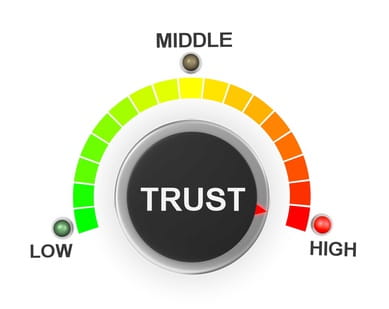
Businesses that prosper in the long term do so built on the foundation of the trusting relationships they forged and nurtured.
Businesses’ long term success can be judged by the extent to which they build and nurture their relationships. Every business is dependent on their internal and external relationships, between groups and individuals. We have suppliers, customers, clients, employees, collective bargaining unions, local communities and many more. Whether we realize it or not, we interact with these groups and individuals through our relationships with them. So how do we keep these relationships working for us?
In the past couple of decades, particularly while preparing and customizing our negotiation training courses, we’ve witnessed our clients’ industries evolve. Internal changes have seen the dispersal of power, filtered down to the lower levels of management and employees, by giving them more responsibility and authority. Similarly, we have also seen an evolutionary change in the interaction between businesses and how they have developed relationships, to achieve more cohesive and durable partnerships.
Success is increasingly dependant on our creating cooperative ventures and developing more creative business solutions. In other words, our negotiations have moved from competitive negotiations, to creating greater value together, by forming relationships that focus more on collaborative negotiations.
There are 3 reasons for this change in behavior:
1. Taking future considerations into account
Many companies realize that if we concentrate too heavily on the amount of value we can get today, we may lose opportunities from transactions of greater value, later on down the road.
2. Give some – get some in return
Today’s businesses recognize that by giving something to our negotiating counterpart in a transaction, we can expect getting back something of greater potential value in return.
3. Creating trust moves us further ahead
By developing relationships that are founded on a basis of trust, we do not need to spend resources on time and money in perpetually monitoring our partner, to ensure the terms of the contract are fulfilled.
How we conduct our negotiations also relates to how we will treat our partnership. If a potential partner places little value on an ongoing relationship, while we perceive our interaction as a long-term partnership, then the negotiators involved in discussing terms, will also view their negotiations from completely different perspectives.
The negotiator who does not place any emphasis on a relationship, will be negotiating from a distributive perspective, or grabbing as much as they can. They will try to gain as much as possible from the distribution of available resources. The negotiator who desires to form a long-term relationship, will be seeking to add value that is beneficial to both sides.
It is important to understand how we will employ our negotiation frame to control our meetings. There are two prime questions that we need to ask ourselves, before we begin our negotiation.
1. Will we interact again in the future?
Obviously, if we are conducting a one time negotiation, and do not expect to interact with our counterpart in the future, we might want to consider taking the distributive negotiation or bargaining approach, to gain as much value as we can.
2. What will we gain through a long-term partnership?
If we believe we will interact over the long term, then we need to adjust our focus and think along the lines, of what value we might receive from the prospective partner,through an ongoing relationship.
What do we do when they don’t value a relationship, but we do?
This is a common problem that many businesses face, especially when it involves our clients. It is clear we need our clients to maintain our business. However, it is common that some clients demand more negotiation concessions than others. As we progress down the road, we find ourselves dismayed that the concessions we have made to appease the client, no longer provides us with any value. We literally end up working for nothing, or at a loss.
Regardless of the manner of our relationship with our clients, we need to distinguish between the agreement and the relationship. By separating the two when we approach our negotiations, we can avoid falling into the trap of trading a good relationship, for a bad agreement.
The Harvard Business Essentials has outlined how we might differentiate between the deal and the relationship, by categorizing the issues separately as follows:
Agreement Issues
- Price negotiation at different volume break points
- Service Agreements
- Replacement of obsolete equipment
- Disputed resolutions
- Termination items
- Assignment of the vendor’s responsibilities under the contract
Relationship Issues
- Recognition of long-term goals
- Recognition of individual goals and negotiation interests
- Future opportunities for collaboration
- Continued trust and respect
When we make an agreement where a relationship is viewed as being of little consequence to one or both parties, our level of negotiation trust building diminishes. We invest less time and exertion in forging a working relationship. We communicate less with each other and as a result, our relationship, tenuous at best, will be tested to the limit, or else it will collapse altogether.
Value of Forging Strong Relationships
When two parties intend forging a relationship, they will likely interact more positively and engage in beneficial communication. They will share and exchange information about their respective goals that leads to an improvement, in their mutual understanding of each other’s business perspectives. The collaborating parties are more likely to expand the scope of their discussions even further. This open venue of communication, will enable them to create more valuable agreement options, and as a result, this will enhance and improve their mutual trust and cooperation.
When two parties approach the negotiations from the perspective of forming relationships, they do so by building the level of trust through an open line of communication. Generally, the agreement reached will likely offer both parties a partnership that presents more possibilities, in creating mutual value that enhances the partnership agreement.
Conclusion
It is clear that the mutual creation of a relationship between two negotiating parties, offers a broader range of partnership possibilities and at a more productive level. The opposite would occur, when one or both of the parties is less interested in forging a relationship and seeks to simply gain as much value as possible. It is vital that we fully understand each other’s perspective, to know which role each is adopting in the negotiation.
Harvard Business Essentials ‘Negotiation’ Harvard Business School Press, (2003).
 Rate this Article
5 out of 5 from 1 responses
 Loading...
YOU MAY ALSO LIKE








It is fascinating on how negotiation works. I did a simple search on google on the value of combining relationships with negotiation and got this fantastic report on the first click. Thanks a ton!